Guide 1

Workload Prioritization Guide

A practical introduction to the frameworks and methods that can help you decide where your attention belongs on any given day, and how to approach your task list with greater confidence.

What Workload Prioritization Actually Involves

Prioritization is the ongoing process of deciding which tasks deserve your attention first, given your available time, energy, and the relative importance of each item. It is not a one-time activity but rather a habit that becomes part of how you approach each day.

The challenge is that most tasks arrive with some sense of urgency, and distinguishing between what genuinely matters and what simply feels pressing is a skill that develops with practice and reflection.

  • Prioritization is distinct from time management — it is about sequencing, not speed.
  • Effective prioritization involves maintaining an updated view of your complete task inventory.
  • Context matters: what is high-priority today may not be tomorrow.
  • Prioritization decisions are easier when made with a clear head, before the day's demands begin.
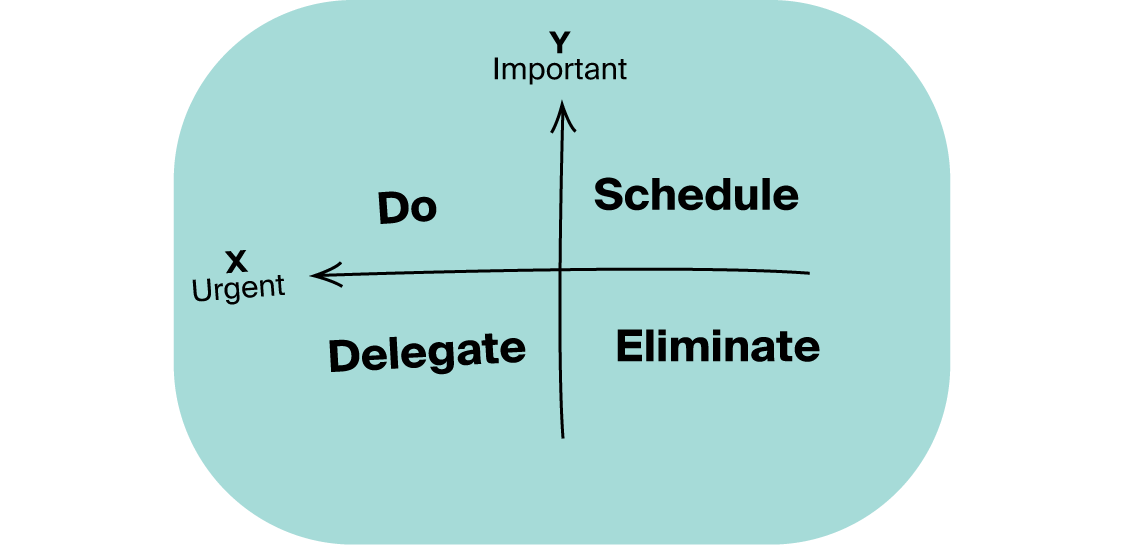
A two-by-two priority matrix showing task categories: urgent and important, not urgent and important, urgent and less important, and not urgent and less important

Practical Prioritization Frameworks

These are some of the more widely used frameworks. None is universally better than the others — the value of each depends on your context.

01

The Priority Matrix

Divide tasks into four categories based on urgency and importance. Address high-importance tasks according to their time sensitivity. Schedule important but less time-sensitive items. Delegate where possible. Review or remove lower-priority items regularly.

02

The ABC Method

Assign a letter to each task: A for high-priority items with significant consequences, B for moderate-priority items with moderate impact, and C for lower-priority items. Work through A tasks before moving to B, and B before C.

03

Most Important Tasks (MITs)

Each morning, identify two or three tasks that — if completed — would make the day meaningfully productive. Focus on completing these before attending to other items on your list.

04

The 1-3-5 Rule

Plan each day around completing one large task, three medium tasks, and five smaller tasks. This structure acknowledges that not all tasks carry equal weight and that a realistic plan is easier to follow than an overcrowded one.

05

RICE Scoring

Evaluate tasks using four factors: Reach (how many people or outcomes are affected), Impact (the significance of the effect), Confidence (how certain you are of the estimates), and Effort (the resources required). Divide the first three by effort to get a prioritization score.

06

Weekly Review Cycle

Set aside time once a week to review your complete task list. Assess what was completed, what remains, and whether existing priorities still reflect your current situation. Adjust your plan accordingly before the next week begins.

Putting Prioritization Into Your Daily Routine

Frameworks are only useful when applied consistently. The following suggestions offer a starting point for incorporating prioritization into the structure of a typical workday.

  • Review your task list the evening before or early in the morning, before checking messages.
  • Assign priority markers to each item before deciding where to start — not while doing the work.
  • Re-evaluate your list at midday if unexpected tasks have arrived that might affect your priorities.
  • At the end of the day, note which tasks remain and whether they can be rescheduled or reconsidered.
  • Keep your active task list short — aim for a daily list of no more than five to eight items.

Consistency matters more than perfect prioritization. A workable system applied daily provides more stability than an elaborate one used only occasionally.

An overview of a structured workload system showing tasks organized by priority and assigned to a daily plan

Related Resources

Prioritization and time management work well together. The following guide explores how structured time allocation can complement the prioritization methods covered here.

Time Blocking Methods

When you have a clearer sense of which tasks matter most, time blocking offers a practical way to protect dedicated time for that work in your daily schedule.